
Wildlife protection at Chäserrugg
Tracks in the snow, a movement in the forest: the mountain landscape of the Churfirsten is not only a place of tranquillity for winter sports enthusiasts, but also a natural habitat for wildlife. Especially during winter, when animals have limited energy reserves, it is important that skiers and other snow sports enthusiasts respect designated wildlife protection zones and remain mindful of signs of animal activity.
Wildlife in winter

Wild animals such as chamois, red deer and the alpine ptarmigan find their natural habitat on the pastures of the Churfirsten range. During the summer months, ibex can also be observed on the Rosenboden plateau, while the whistles of marmots echo from the rocky cliffs between the Churfirsten peaks.
With the arrival of the first snowfall, some animals retreat into hibernation, while others move to lower elevations. As snow cover reduces the availability of food, wildlife conserves energy by limiting movement and lowering heart rates.
However, when an animal is forced to flee, it expends a significant amount of energy, which can quickly become life-threatening during winter. Such disturbances cause physiological changes, including increased heart rates and elevated stress hormone levels. If this additional energy expenditure cannot be compensated for through food intake, the consequences can be fatal for the animal.
Finding rest together through wildlife protection zones
For this reason, wildlife protection zones have been established, providing animals with the quiet refuge these areas are designed to offer. They give wildlife a place to retreat without being constantly exposed to the stress of encountering winter sports enthusiasts.
- Respect wildlife protection zones and protected areas: These areas provide essential refuges for wildlife.
- Stay on marked trails and designated routes in forested areas: This helps wildlife become accustomed to human presence.
- Avoid forest edges and snow-free areas: These are important feeding and resting habitats for wildlife.
- Keep dogs on a leash, especially in forests: Free-running dogs can cause significant disturbance and trigger flight responses in wildlife.

Funnel principle in open terrain

To minimise disturbance to wildlife, winter sports enthusiasts should follow the funnel principle. As the name suggests, the available space for movement when descending on skis or snowboard gradually narrows into a funnel-shaped corridor.
On the uppermost level, on open slopes above the tree line and forest boundary, winter sports enthusiasts can move about relatively freely. The only areas that should be avoided are rocky and snow-free (bare) patches, as wildlife often searches for food there.
On the middle level, the tree line begins, where many wild animals seek both food and shelter. For this reason, the area available for movement narrows in a funnel shape towards the forest.
On the lowest level, winter sports enthusiasts are already at the edge of the forest or even within the forest itself. Here, designated routes and trails should be used, as a particularly large number of wild animals can be found along the forest edge and in more open areas of the forest.
Observe wildlife protection zone markings
To avoid accidentally entering a wildlife protection zone, it is important to pay attention to the markings. Green signs indicate the boundaries of these areas, while ropes are used to restrict access.
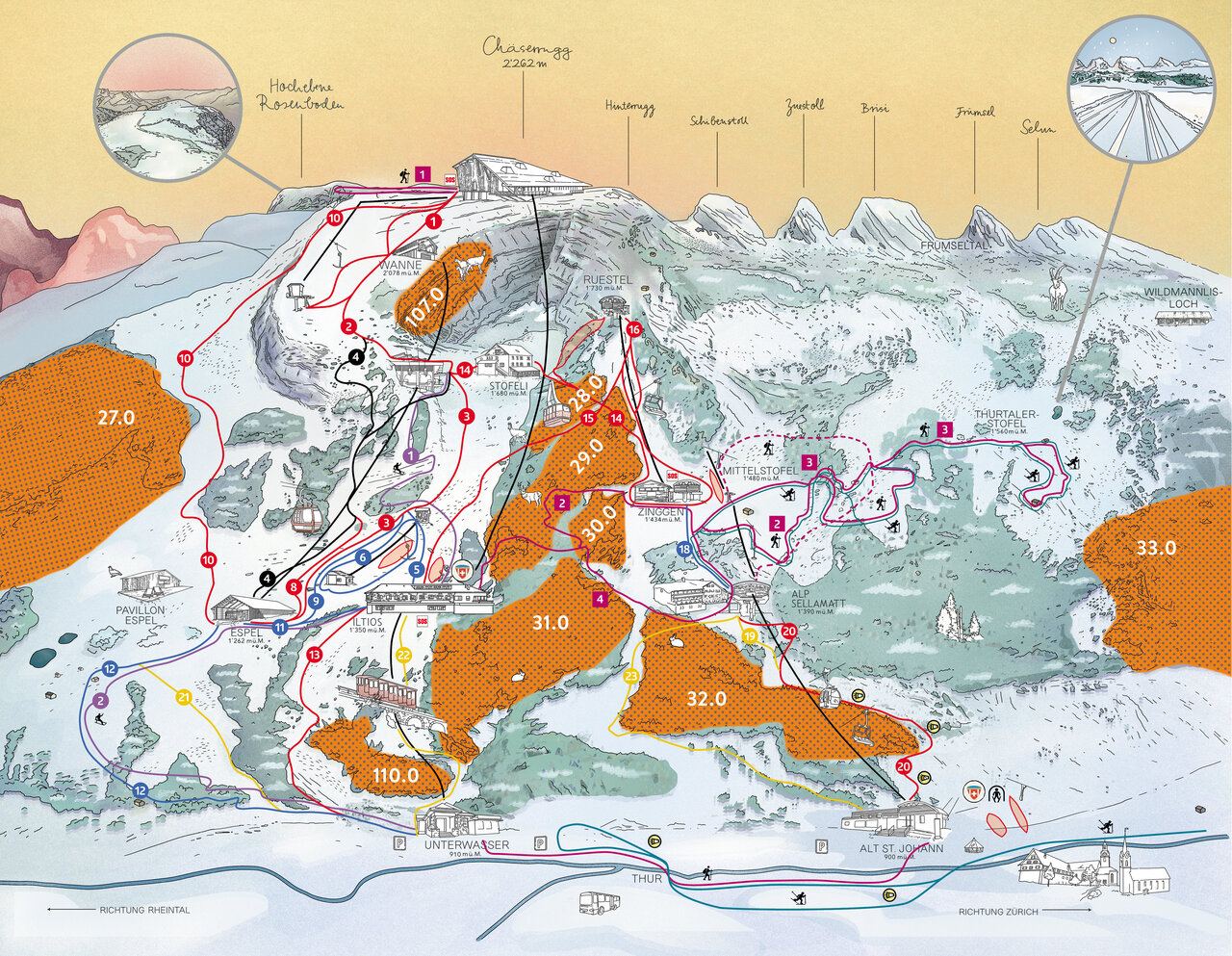
It is also worth consulting a map, as it shows all designated wildlife protection zones. On the map in the winter brochure, these zones are shown with a dotted pattern, while on the maps provided by swisstopo, they are marked in red.
Further down on this page, you will find a detailed overview of the wildlife protection zones in the Chäserrugg area.

Whose Tracks Are These?
The tracks left in the snow also reveal which animals roam the Chäserrugg area. If you can identify the tracks, you can often determine which animal left them behind. Can you recognise the animal from its tracks?

... an alpine ptarmigan
With its completely white plumage in winter, the Alpine ptarmigan is exceptionally well camouflaged. As a result, it is rarely seen, although its rasping calls can often be heard throughout the mountain landscape.
At night, and sometimes even during the day, the Alpine ptarmigan burrows into the snow. While resting there, it digests its food, and the snow provides insulation and protection. This gives the bird a chance to conserve energy and absorb vital nutrients.
However, it can detect vibrations from approaching people at a distance of up to 300 metres and will flee from its snow shelter. This interrupts the bird’s digestion, an essential process for its survival, and causes it to expend additional energy in escape. This is why wildlife protection zones are particularly important for the Alpine ptarmigan.

... a red deer
During the winter months, red deer enter a state of energy conservation known as torpor. Similar to hibernation, this state allows the deer to reduce its heart rate by up to 60%. Its body temperature also decreases, helping it conserve valuable energy.
To enter and maintain this state, however, the red deer must feel safe and undisturbed. If it is repeatedly disturbed by winter sports enthusiasts, it cannot reach this essential state of rest and must use additional energy to flee. As food sources are limited during winter, repeated flight responses can have serious consequences for the animal.
Tracks can reveal whether a deer has been forced to flee: the imprint of the dewclaws only becomes visible in the tracks of a running red deer. This is why wildlife protection zones are so important for red deer.

Find out more about the red deer

... a chamois
The chamois can often be found near the tree line. During the winter months, its coat becomes darker and thicker, providing better insulation against the cold and allowing it to absorb more warmth from the sun. At this time of year, chamois also move over shorter distances and live within smaller home ranges. These are often located on steep slopes with a south-easterly to south-westerly aspect, where sunshine is plentiful. As a result, there is usually less snow in these areas, making it easier for the animals to access food.
To conserve energy, the chamois reduces the size of its rumen, the first chamber of its stomach. However, because food is scarce during winter, it must still spend a large part of the day foraging. The rest of the time, it rests in sunny or sheltered locations to save additional energy. If it has to flee from winter sports enthusiasts, especially through deep snow, it expends valuable extra energy. This is why wildlife quiet zones are so important for the chamois.

Find out more about the chamois

... a mountain hare
Over the course of the year, the mountain hare changes its coat three times. Its fur is white during the winter months, grey-brown in autumn and spring, and brown in summer. In winter, its fur also provides additional insulation against the cold by trapping air between the hairs. Its hind feet are also heavily covered in fur, and its widely spreadable toes allow it to move across the snow as if wearing snowshoes.
Open areas above the tree line and sparse forests in winter provide the mountain hare with its natural habitat. It is mostly nocturnal, but if it lives in a quiet area, it can also be spotted during the day. During the winter months, it adopts a resting position on rocks, snow-free patches of ground or under bushes. This allows it to retain as much body heat as possible.
However, if disturbed by a winter sports enthusiast, it will suddenly flee at the last moment. This requires a great deal of energy and interrupts its resting period. This is why wildlife protection zones are so important for the mountain hare.

Find out more about the mountain hare
There are several wildlife protection zones in the Chäserrugg area. These can be recognised by the information signs and the ropes with small flags marking the boundaries of the zones. The wildlife protection zones are also indicated as dotted areas on the area map.
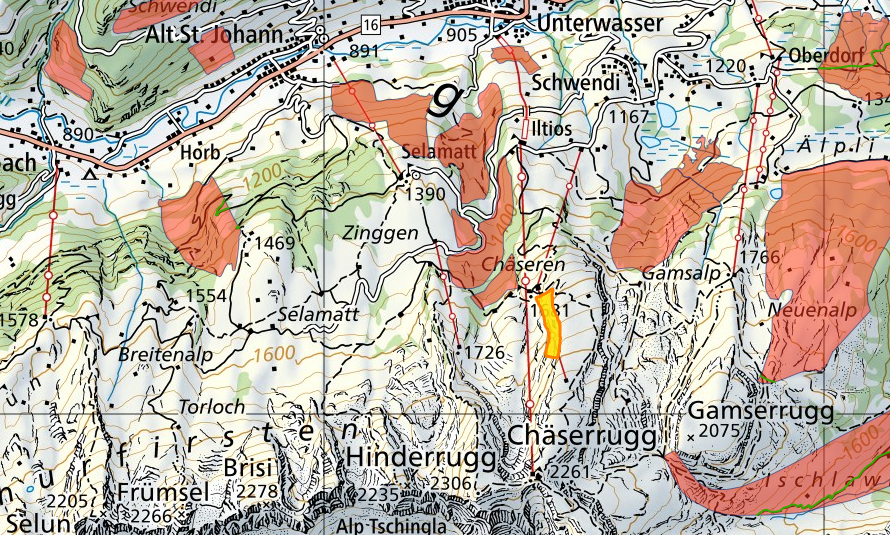
| Wildlife protection zone | Stöfeli (Nr. 107.0) |
| Protection status | Legally binding |
| Regulations | No entry permitted |
| Additional information | No entry when snow is present, dogs must be kept on a leash |
| Protection period | 01.01. - 31.12. |
| Legal basis | Protection ordinance |
| Year of adoption | 2015 |
| Canton | SG |
Sources: www.wildruhezonen.ch / map.geo.admin.ch
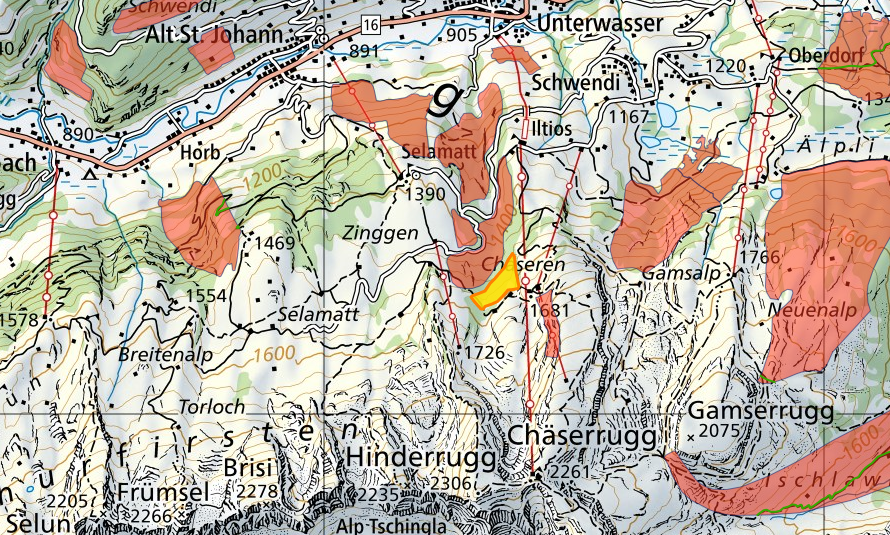
| Wildlife protection zone | Schwiloch (Nr. 28.0) |
| Protection status | Legally binding |
| Regulations | No entry permitted |
| Additional information | No entry when snow is present, dogs must be kept on a leash |
| Protection Period | 01.01. - 31.12. |
| Legal Basis | Protection ordinance |
| Year of Adoption | 2015 |
| Canton | SG |
Sources: www.wildruhezonen.ch / map.geo.admin.ch
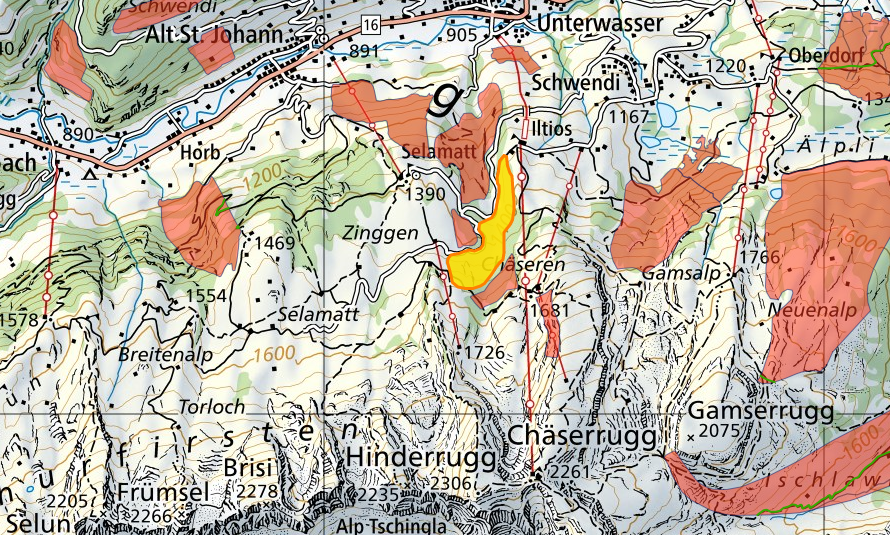
| Wildlife protection zone | Bannwald (Nr. 29.0) |
| Protection status | Legally binding |
| Regulations | No entry permitted |
| Additional information | No entry when snow is present, dogs must be kept on a leash |
| Protection period | 01.01. - 31.12. |
| Legal basis | Protection ordinance |
| Year of adoption | 2015 |
| Canton | SG |
Sources: www.wildruhezonen.ch / map.geo.admin.ch
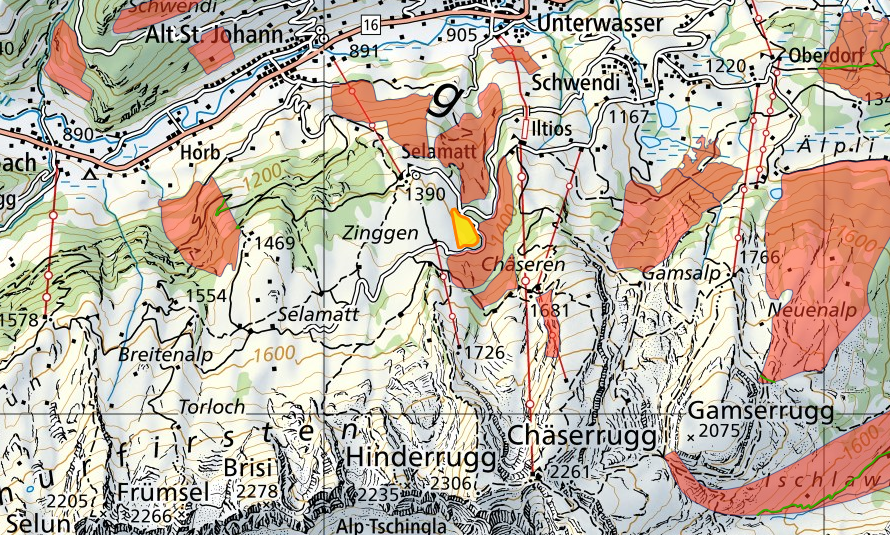
| Wildlife protection zone | Zinggen (Nr. 30.0) |
| Protection status | Legally binding |
| Regulations | No entry permitted |
| Additional information | No entry when snow is present, dogs must be kept on a leash |
| Protection period | 01.01. - 31.12. |
| Legal basis | Protection ordinance |
| Year of adoption | 2015 |
| Canton | SG |
Sources: www.wildruhezonen.ch / map.geo.admin.ch
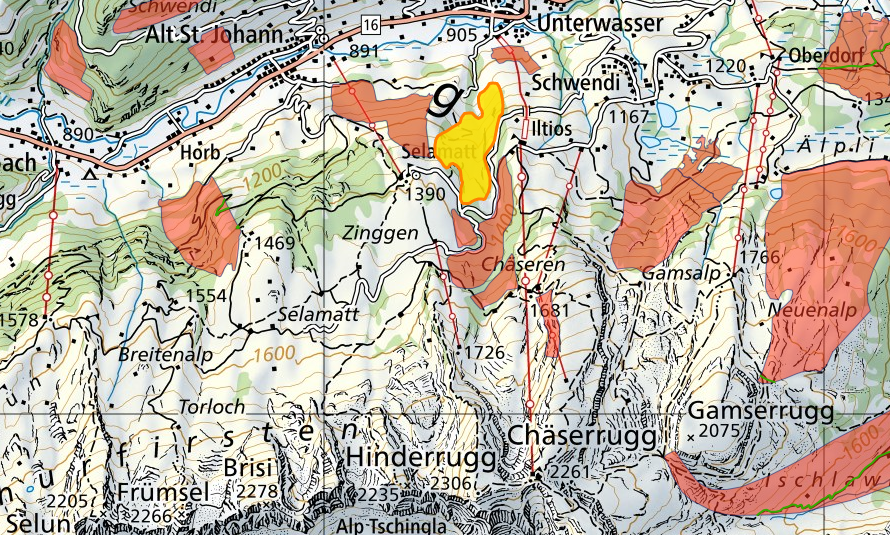
| Wildlife protection zone | Vorderer Herrenwald (Nr. 31.0) |
| Protection status | Legally binding |
| Regulations | No entry permitted |
| Additional information | No entry when snow is present, dogs must be kept on a leash |
| Protection period | 01.01. - 31.12. |
| Legal basis | Protection Ordinance |
| Year of adoption | 2015 |
| Canton | SG |
Sources: www.wildruhezonen.ch / map.geo.admin.ch
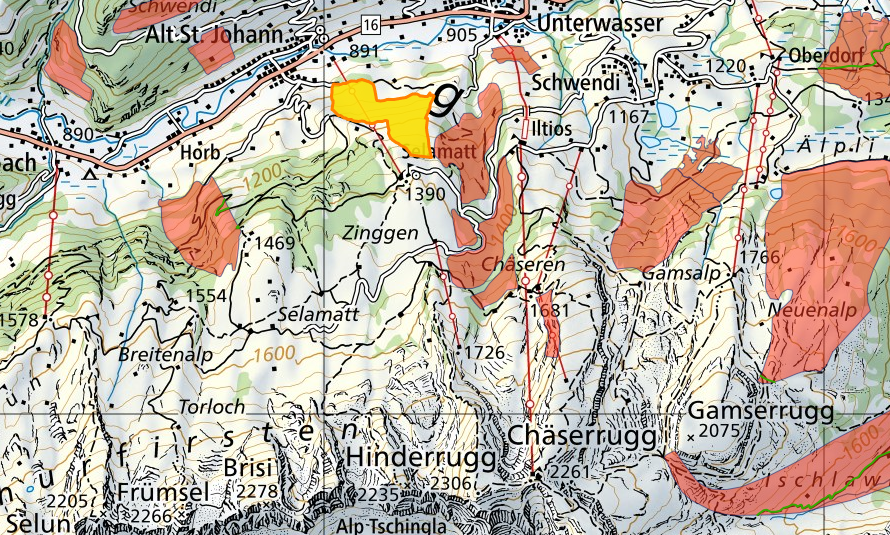
| Wildlife protection zone | Pfruendwald-Spennwald (Nr. 32.0) |
| Protection status | Legally binding |
| Regulations | No entry permitted |
| Additional information | No entry when snow is present, dogs must be kept on a leash |
| Protection period | 01.01. - 31.12. |
| Legal basis | Protection ordinance |
| Year of adoption | 2015 |
| Canton | SG |
Sources: www.wildruhezonen.ch / map.geo.admin.ch
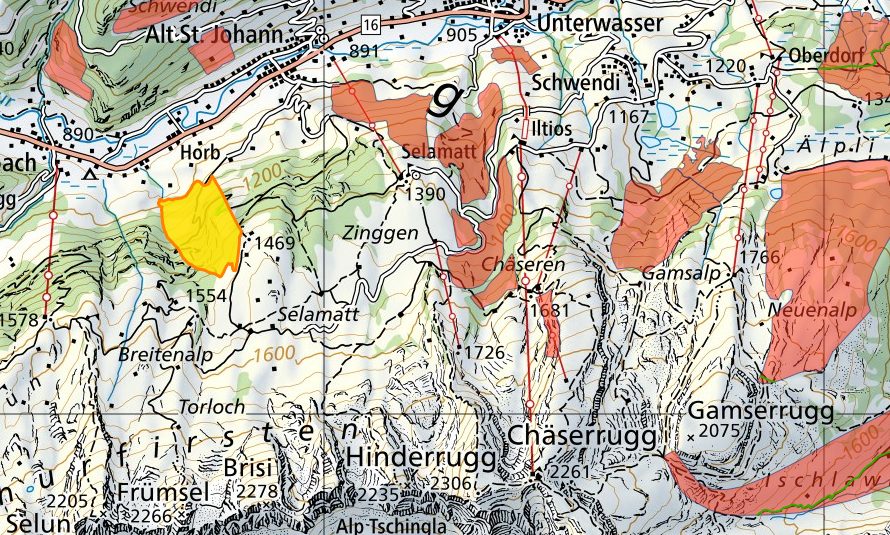
| Wildlife Protection Zone | Weid-Schwendibüel (Nr. 33.0) |
| Protection Status | Legally binding |
| Regulations | No entry permitted |
| Additional information | No entry when snow is present, dogs must be kept on a leash |
| Protection period | 01.01. - 31.12. |
| Legal basis | Protection ordinance |
| Year of adoption | 2015 |
| Canton | SG |
Sources: www.wildruhezonen.ch / map.geo.admin.ch
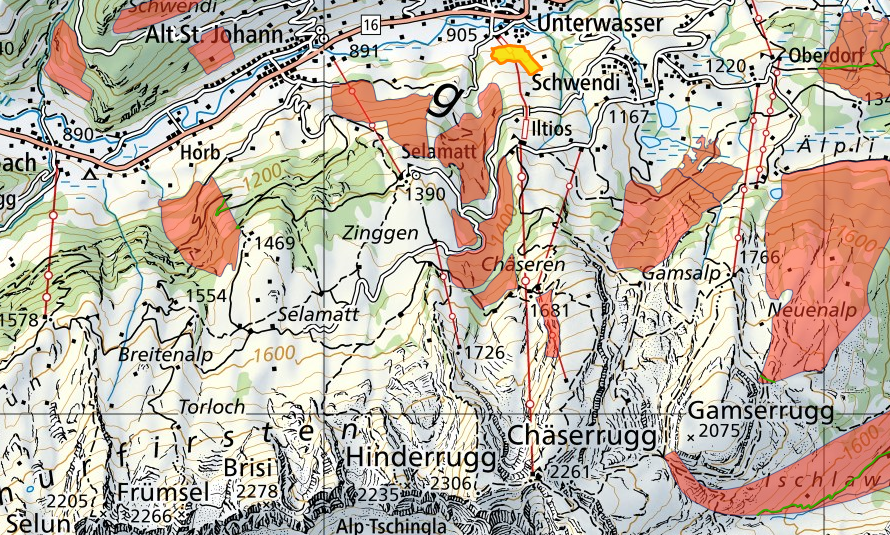
| Wildlife protection zone | Burenwald (Nr. 110.0) |
| Protection status | Legally binding |
| Regulations | No entry permitted |
| Additional information | No entry when snow is present, dogs must be kept on a leash |
| Protection period | 01.01. - 31.12. |
| Legal basis | Protection ordinance |
| Year of adoption | 2015 |
| Canton | SG |
Sources: www.wildruhezonen.ch / map.geo.admin.ch
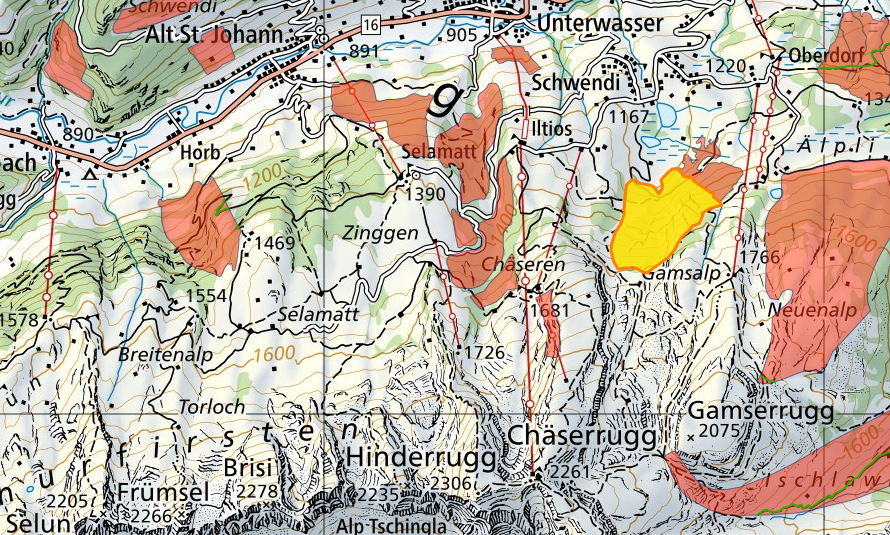
| Wildlife protection zone | Seichbergwald (Nr. 27.0) |
| Protection status | Legally binding |
| Regulations | No entry permitted |
| Additional information | No entry when snow is present, dogs must be kept on a leash |
| Protection Period | 01.01. - 31.12. |
| Legal basis | Protection ordinance |
| Year of adoption | 2015 |
| Canton | SG |
Sources: www.wildruhezonen.ch / map.geo.admin.ch
Information centres
wildruhezonen.ch
This online portal provides information about the wildlife protection zones currently in force in Switzerland and is coordinated by the Federal Office for the Environment (FOEN). In addition to the integrated map provided by swisstopo, the website offers a wide range of information about wildlife and the importance of wildlife protection zones for animal habitats.
Nature & leisure
Through various campaigns, the association encourages people seeking recreation and those participating in outdoor sports to behave in a way that respects and protects nature and the environment. The campaign "Enjoy Snow Sports Responsibly – Respect Wildlife and Their Boundaries" raises awareness and provides information materials for snow sports enthusiasts.
Pro Natura
A Swiss nature conservation organisation that gives nature a voice and promotes a stronger connection with the natural environment. On its page "Respect Nature", the organisation outlines important guidelines for enjoying nature responsibly.
Swiss Alpine Club (SAC)
The SAC is Switzerland's mountaineering association, committed to sustainable development and the preservation of the Alpine environment. On its page "Nature-Friendly Snow Sports – Guests in the Snow", the SAC explains how wildlife survives during winter and what winter sports enthusiasts should bear in mind.


